Concrete Lifting in Amarillo, TX
Raise settled concrete back into position through small drilled ports, without demolition, forming, or a week of curing time.
Concrete lifting, sometimes called slabjacking, is the general name for raising a sunken slab by pumping material into the space beneath it. The slab itself is usually fine. What failed is the soil under it, and lifting fixes the problem where it actually lives: below the concrete, not on top of it.
In the Amarillo area, lifting is used on driveways, sidewalks, patios, garage floors, porches, pool decks, and commercial floors. If the slab is structurally sound and simply sitting too low, there is a good chance it can be raised instead of replaced.
How Does Concrete Lifting Work?
Every lifting method follows the same basic logic. Holes are drilled through the slab, material is pumped through them to fill the empty space below, and continued pumping generates enough pressure to raise the concrete in small increments. A technician watches the slab come up, checks elevations against the surrounding concrete, and stops when the surfaces line up. The holes are then patched with a color-matched compound.
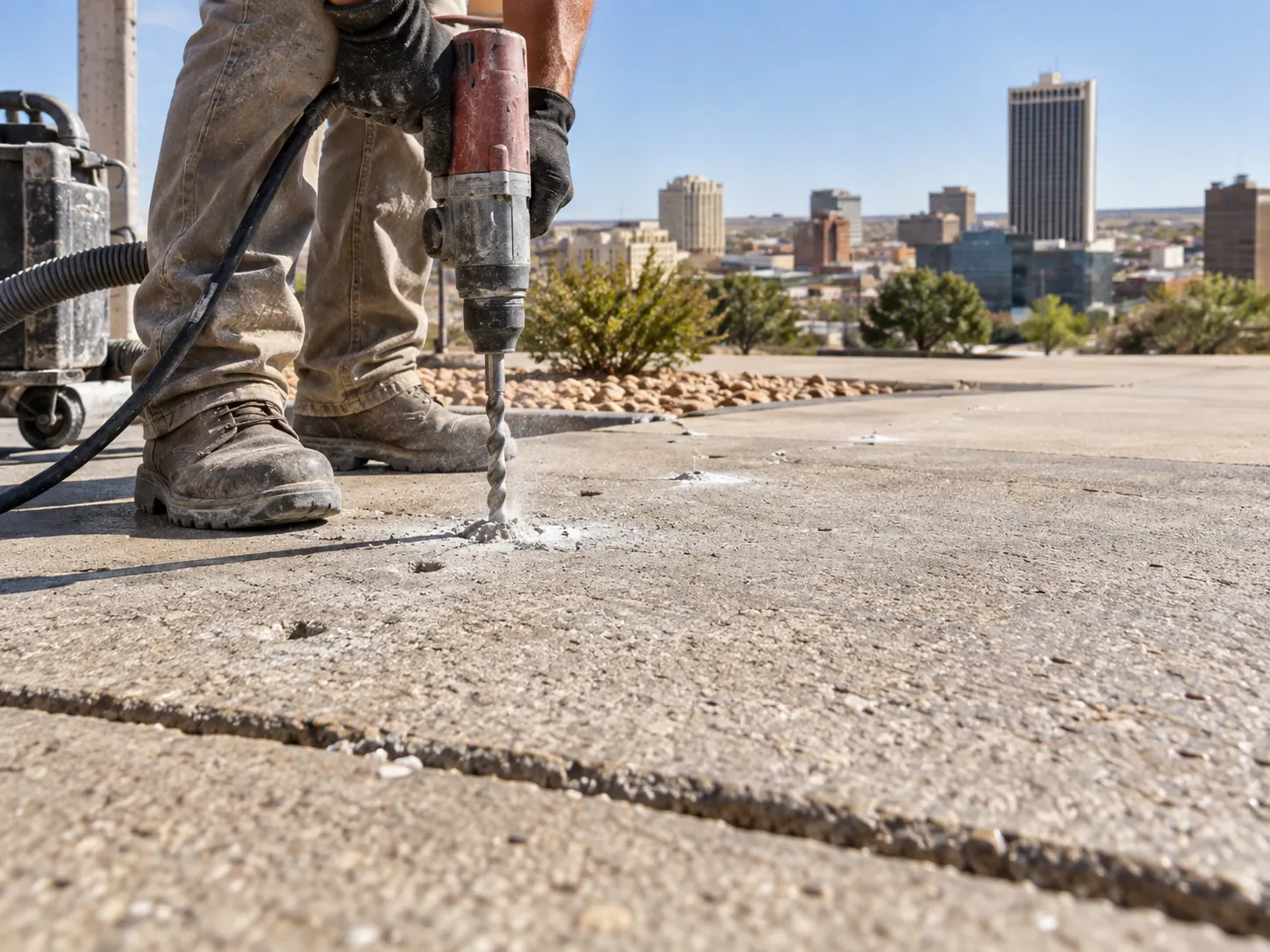
Injection ports are drilled through the slab, then patched after the lift.
The lift happens gradually, not all at once. Raising a slab a half inch at a time keeps the concrete from cracking under uneven pressure and gives the operator control over the final position.
What Materials Are Used to Lift Concrete?
Two materials dominate the trade, and the differences matter enough that we cover them on separate pages.
- Polyurethane foam injection, often called polyjacking or foam jacking. Two liquid components mix under the slab, expand into rigid foam, and cure within minutes. Holes are about the size of a dime.
- Mudjacking, the traditional approach. A slurry of cement, soil, and water is pumped through larger holes. It costs less per project in some cases but weighs far more and cures slower.
A third situation calls for a different goal entirely. When a cavity has opened under a slab that has not yet dropped, void filling restores support before settlement starts, and slab stabilization locks down concrete that rocks or flexes underfoot.
What Kinds of Slabs Can Be Lifted?
Lifting works on most exterior and interior flatwork:
- Driveways that have settled at the garage or street
- Sidewalks with offset panels and trip edges
- Patios tilting toward the house
- Garage floors that dropped along the stem wall
- Porches and stoops pulling away from the entry
- Commercial floors, docks, and aprons
Lifting is not the answer for everything. Concrete that is shattered into small pieces, crumbling from surface failure, or thinner than about three and a half inches may not take a lift well. In those cases replacement is the honest recommendation, and the tradeoffs are laid out on the leveling vs replacement page.
How Much Can a Slab Be Raised?
Routine lifts run from a half inch to about three inches. Larger corrections are possible when conditions allow, but a slab that has dropped six or eight inches usually signals a serious soil problem that needs to be understood before anything gets pumped under it. The assessment step exists for exactly that reason.
Why Lift Instead of Replace?
Three reasons come up on nearly every project. Cost: lifting can avoid demolition, disposal, forming, and a new pour, so it is often less expensive than replacing otherwise usable concrete. Time: many residential lifting projects can be completed relatively quickly, and polyurethane systems often return slabs to use much sooner than replacement. Disruption: no demolition, no concrete trucks across the lawn, no forms, no haul-off. Full numbers are on the cost page.
Concrete Lifting Questions
Does lifting damage the concrete?
A controlled lift should not. Material is pumped in stages so pressure spreads evenly under the slab, and the operator raises it a little at a time. The drilled ports are small, get patched, and do not weaken the slab in any meaningful way. The main risk comes from trying to lift concrete that was already too deteriorated, which is why the slab gets evaluated first.
How long does a concrete lifting job take?
Many residential projects are completed in a single visit, often within a few hours, though duration depends on slab size, lift height, and access. Large commercial floors are usually done in planned sections so parts of the facility stay in use.
Will the lifted slab match the surrounding concrete exactly?
The goal is to bring surfaces back into alignment so transitions are flush and water drains correctly. Most lifts get very close to original position. A slab that has been settling for years can have edge wear or curling that keeps the match from being perfect, and an honest assessment will tell you that up front.
Can concrete be lifted in cold weather?
Usually, yes. Polyurethane foam cures by chemical reaction and works in cold temperatures, which matters in Amarillo winters. Frozen ground under a slab can complicate a lift, so timing may shift a few days in a hard freeze. Mudjacking slurry is more sensitive to freezing during cure.
Have a Slab That Needs Lifting?
Call (806) 513-5505 to discuss the slab, how far it has dropped, and where the property sits. You can also request service online if you prefer.