Concrete Leveling in Amarillo, TX
Lift and stabilize sunken driveways, sidewalks, patios, garage floors, and commercial slabs without automatically tearing out and replacing the concrete.
Serving Amarillo, Canyon, Bushland, and the surrounding Texas Panhandle.
Amarillo Concrete Leveling
Amarillo Concrete Leveling is focused on one problem: concrete that has settled, tilted, or lost the soil support beneath it. Driveways, sidewalks, patios, garage floors, pool decks, warehouse floors, and loading areas across the Amarillo area can often be raised and stabilized instead of demolished and repoured. Depending on the slab and the ground under it, the right repair might be polyurethane foam injection, mudjacking, void filling, or slab stabilization. The approach is simple: figure out why the concrete moved, decide whether it can be lifted safely, and match the project with the repair option that actually fits it. If a slab is too damaged or unstable for lifting, replacement may be the better option.
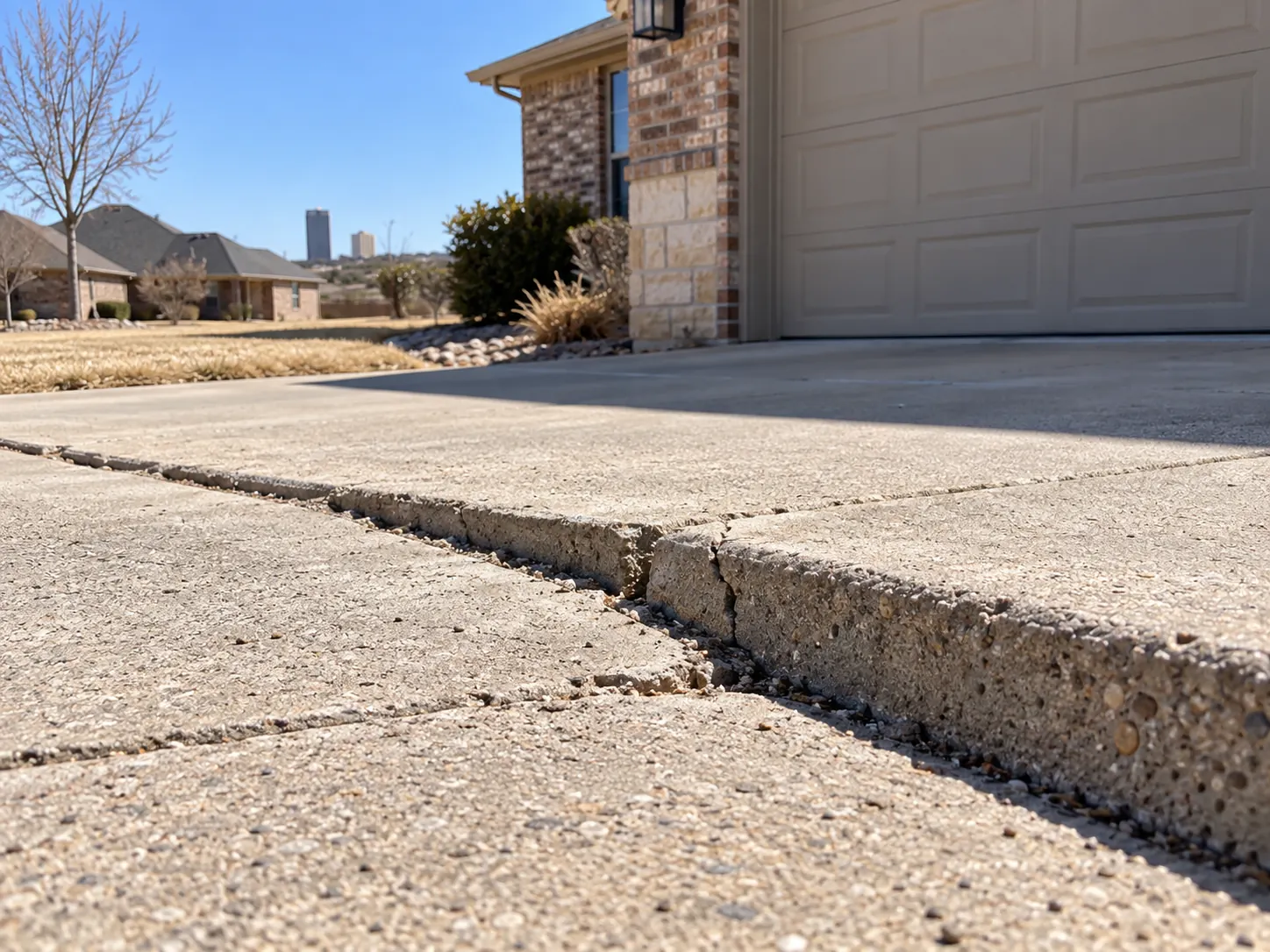
Signs a Slab Has Settled
Settled concrete rarely announces itself all at once. It drops a little each season until one day the garage door will not seal, or a visitor catches a toe on the front walk. Watch for:
- A driveway slab sitting lower than the garage floor or street apron
- Sidewalk panels offset at the joints, creating a trip edge
- A patio tilting back toward the house and pooling water at the foundation
- Steps or a porch pulling away from the entry
- Cracks that keep widening as one side of the slab drops
- A hollow sound when you walk on or tap the concrete
Any of these can point to soil settlement or a void forming under the slab. Both tend to get worse, not better, when ignored.
Concrete Leveling for Amarillo Homes
Most residential leveling projects are completed in a single visit, and the concrete you already own stays in place. These are the surfaces Amarillo homeowners ask about most.
Driveway Leveling
Raise settled driveway slabs, close gaps at the garage, and correct panels that drain toward the house.
Driveway leveling in AmarilloSidewalk Leveling
Remove trip hazards where walkway panels have dropped or heaved at the joints.
Sidewalk leveling in AmarilloPatio Leveling
Lift patios that have sunk or tilted so water drains away from the foundation again.
Patio leveling in AmarilloGarage Floor Leveling
Address settled garage slabs, cracked corners, and floors that have separated from the stem wall.
Garage floor levelingPool Deck Leveling
Level uneven pool deck sections that create trip edges and drain toward the pool shell.
Pool deck levelingPorch and Entryway Leveling
Lift settled front porches, stoops, and entry walks that have pulled away from the home.
Porch and entryway levelingHow Concrete Leveling Works
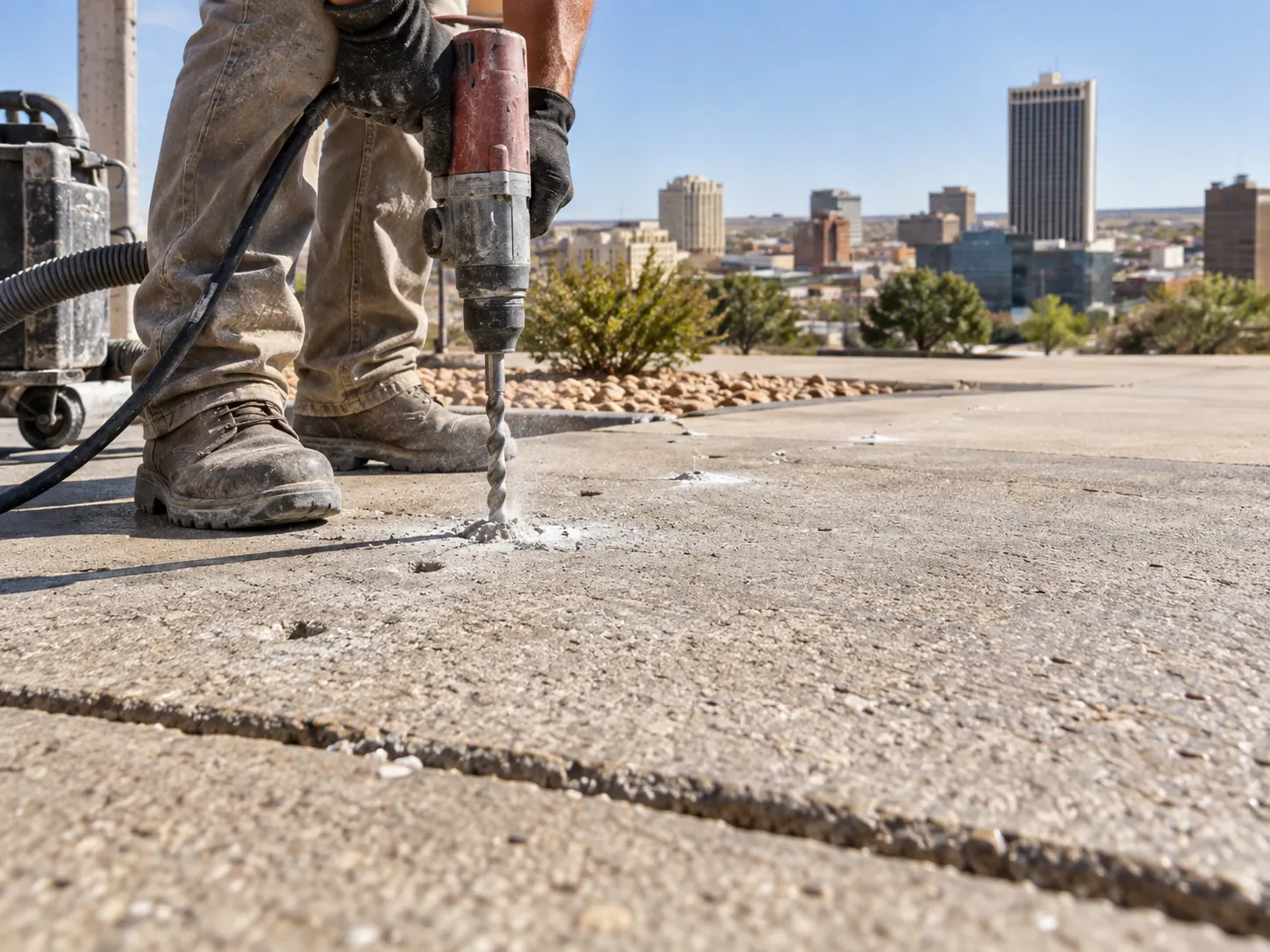
Concrete leveling treats the real problem, which is almost never the concrete itself. It is the ground underneath. Small holes are drilled through the slab, material is pumped below it to fill empty space, and controlled pressure raises the concrete back toward its original position. The holes are then patched.
- Assess the slab Confirm the concrete is sound enough to lift and find out where support was lost.
- Drill small ports Penny-sized holes for foam, or slightly larger ones for mudjacking.
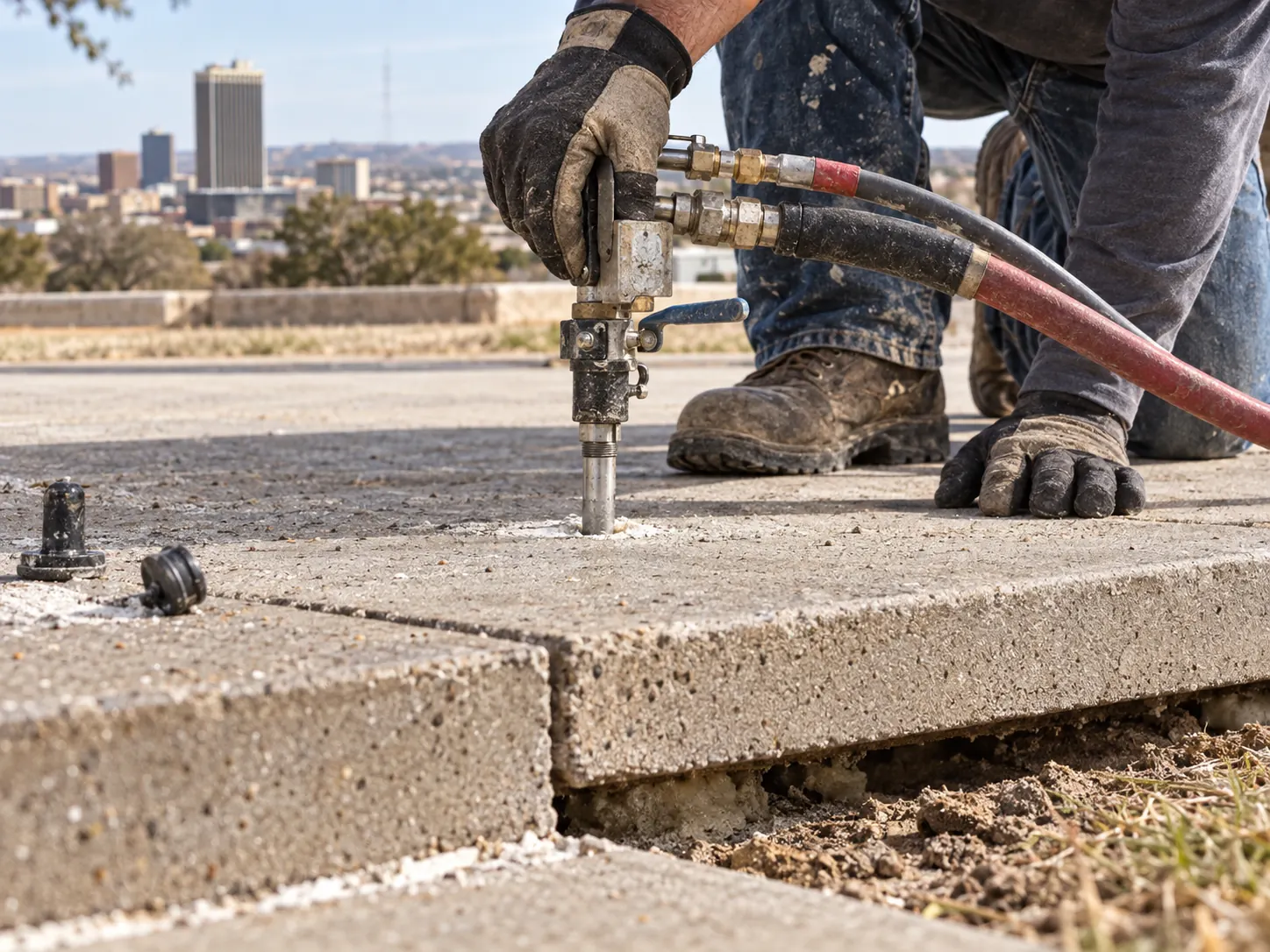
- Inject and lift Material fills the void and raises the slab in small, controlled increments.
- Patch and clean up Ports are patched after injection, and polyurethane-lifted slabs can often return to use much sooner than newly poured concrete. Exact return-to-service times depend on the material and application.
Polyjacking, Mudjacking, and Other Options
There is no single right way to lift concrete. Polyjacking injects expanding polyurethane foam through dime-sized holes and cures within minutes. Mudjacking pumps a cement-based slurry under the slab and still makes sense for certain projects. When erosion has opened a cavity, void filling restores support before the gap grows. And when a slab is not badly out of position but sounds hollow or rocks underfoot, slab stabilization locks it in place before settlement starts.
Which method fits depends on slab thickness, the amount of lift needed, soil conditions, access, and budget. The comparison page below walks through the differences.
What a Lifted Slab Looks Like
A successful lift closes the gap between slabs, restores drainage slope, and removes the trip edge at the joints. The image here is an illustrative before-and-after example of a settled driveway raised back to meet the garage slab.
Leveling does not make old concrete look new. Existing cracks remain visible after the lift, though they typically close up tighter once the slab is supported evenly. What changes is the position and stability of the slab: transitions line up again, water flows the right direction, and the surface stops moving.
For badly shattered or deteriorated concrete, lifting may not be the right call. That situation is covered honestly on our leveling vs replacement page.
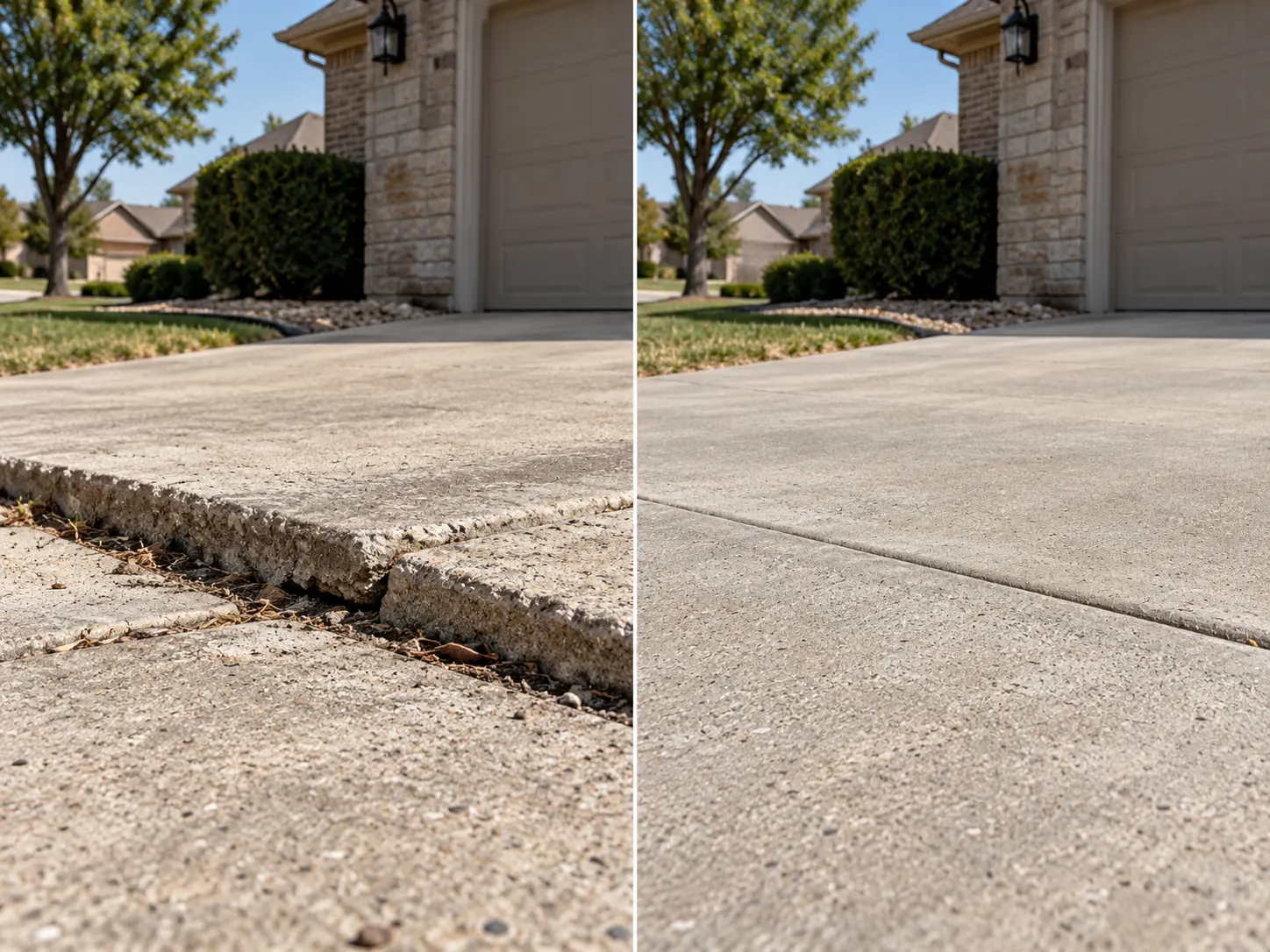
Illustrative before-and-after example, not a photo of a specific customer project.
Commercial Concrete Leveling in Amarillo
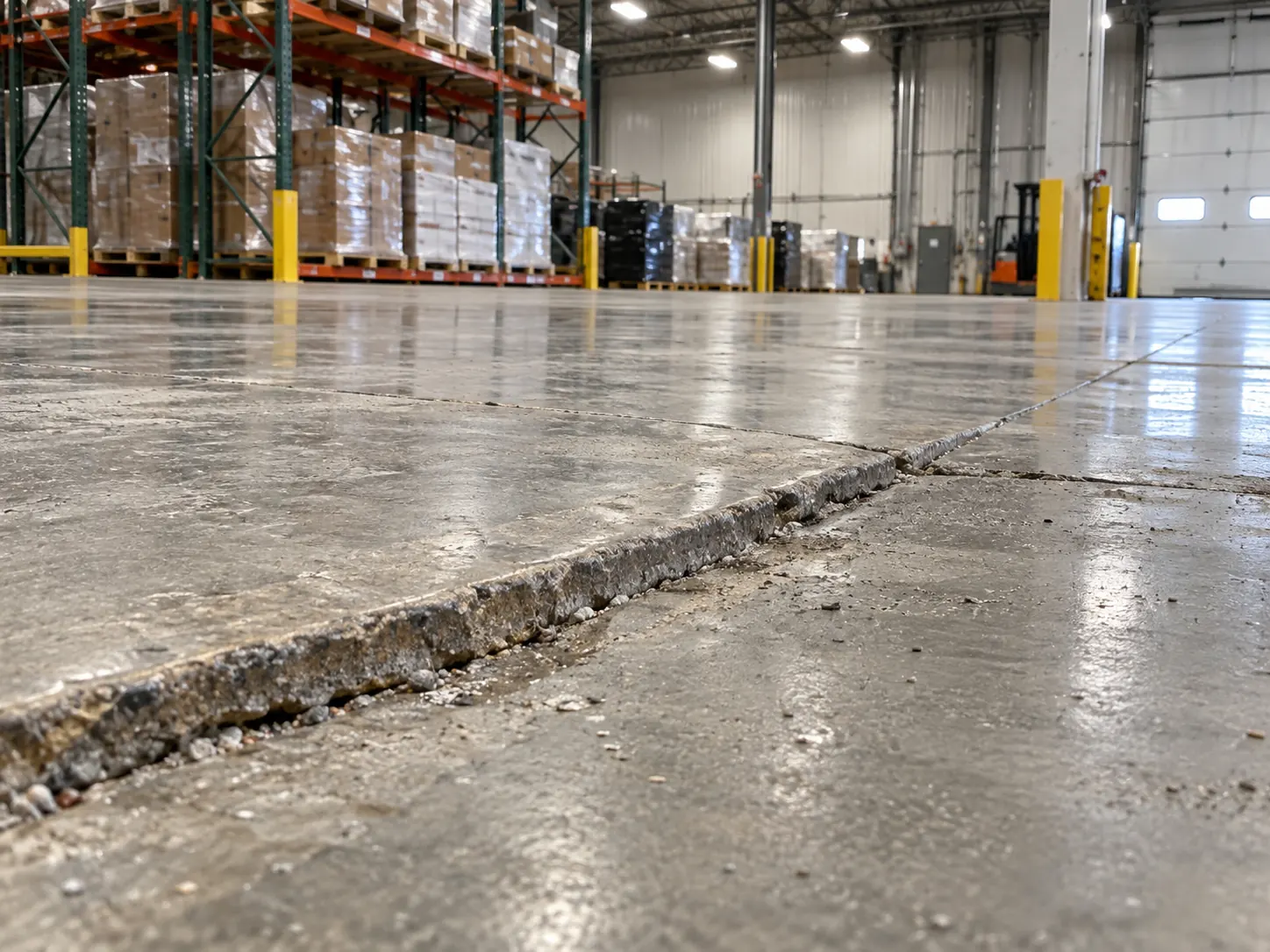
Settled concrete costs commercial properties money in ways a homeowner never sees: forklifts slowing down over bad joints, pallet jacks catching on offsets, trip claims on walkways, and trucks pounding a dropped dock apron a little lower every week. Leveling lets most facilities fix the slab without shutting down operations or scheduling demolition.
We cover warehouse floors, industrial and manufacturing floors, loading docks and dock aprons, concrete parking areas, commercial sidewalks, and apartment and HOA properties.
Why Does Concrete Sink in Amarillo?
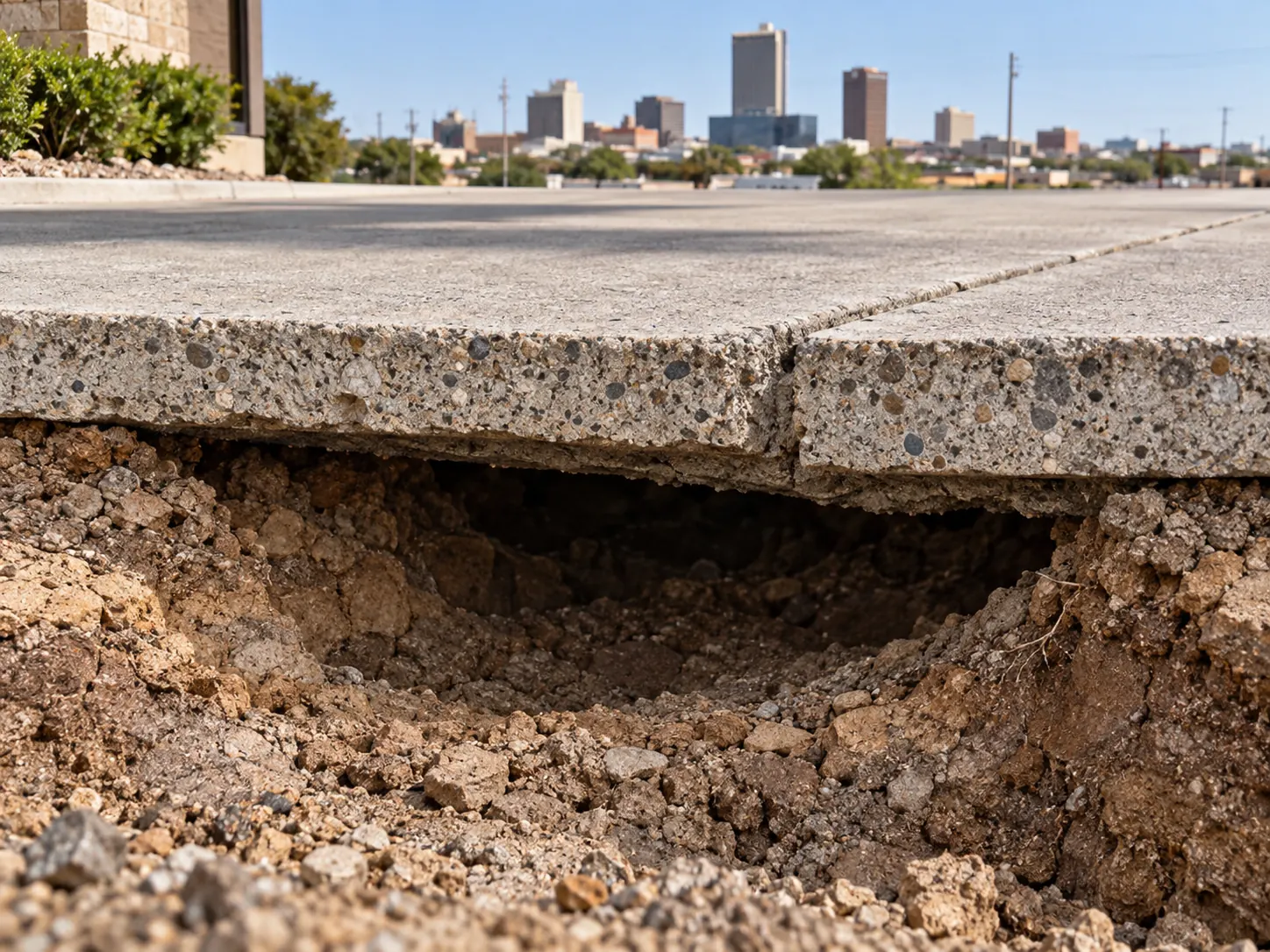
Concrete sinks when the soil under it stops holding it up. In the Texas Panhandle that usually comes down to a few causes: clay-heavy soils that shrink during dry stretches and swell after rain, fill dirt that was never compacted well when the property was built, and water from downspouts or irrigation washing fines out from under the slab edge.
Amarillo's climate makes all three worse. Long dry periods pull moisture out of clay soils and open gaps beneath slabs. Then a heavy spring storm drops an inch of rain in an hour and erodes what support was left. The result is a slab bridging empty space until its own weight cracks it and drops it.
Is Leveling Cheaper Than Replacing the Concrete?
In most cases, yes. Lifting an existing slab is usually less expensive than tear-out and repour, avoids the multi-day demolition and repour sequence, and skips the weeks of curing time new concrete needs. Replacement still wins when a slab is crumbling, shattered into small pieces, or was poured badly in the first place. Here is the short version:
| Factor | Concrete Leveling | Full Replacement |
|---|---|---|
| Typical cost | Often less costly than demolition and replacement | Highest cost: demolition, haul-off, forms, new pour |
| Time on site | Usually a few hours | Several days plus curing time |
| Ready to use | Often rapid with polyurethane systems; slurry methods generally require more curing time | Requires curing before normal use |
| Appearance | Existing surface stays, cracks remain visible | Brand new surface |
| Best for | Structurally sound slabs that have settled | Crumbling, shattered, or badly built slabs |
Full comparison: leveling vs replacement | What concrete leveling costs in Amarillo
Service Area
Amarillo Concrete Leveling serves Amarillo and nearby Panhandle communities. Service availability may depend on project type and location.
Amarillo Metro
Amarillo, Canyon, and Bushland, including residential neighborhoods and commercial corridors on both sides of I-40 and I-27.
View all service areasNorthern Panhandle
Borger, Pampa, and Dumas for residential and commercial leveling projects.
Borger concrete levelingSouthern Panhandle
Hereford and the farm and ranch properties along US 60 southwest of Amarillo.
Hereford concrete levelingConcrete Leveling Questions
How much does concrete leveling cost in Amarillo?
Most residential leveling projects in the Amarillo area fall somewhere between a few hundred and a few thousand dollars, depending on slab size, how far it has dropped, and the size of any void underneath. That is often well below the cost of tearing out and repouring the same slab. See the cost guide for a fuller breakdown.
Can a cracked driveway still be leveled?
Usually, yes. Cracks alone do not rule out lifting. Each broken section can often be raised individually and the pieces brought back into alignment. Leveling becomes the wrong tool when concrete is shattered into many small fragments or crumbling from surface deterioration.
How soon can concrete be used after polyjacking?
Many polyurethane lifting foams cure quickly and can allow the slab to return to use much sooner than replacement concrete. The exact cure time and when foot or vehicle traffic can resume depend on the product, slab, load, and installer specifications.
How long does concrete leveling last?
A properly lifted slab can stay in place for many years. Longevity depends mostly on what happens to the soil afterward: if drainage problems that caused the settlement are corrected, the repair tends to hold. Polyurethane foam does not wash out or shrink, while mudjacking slurry is heavier and can resettle if the underlying soil keeps moving.
Ready to Fix That Sunken Slab?
Have a sunken driveway, sidewalk, patio, or other slab? Call (806) 513-5505 to discuss the problem, or request service online if you prefer.